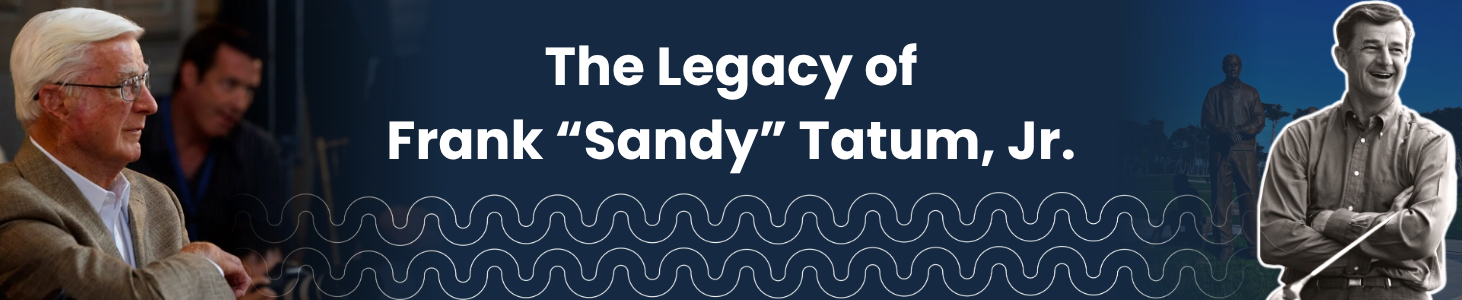
The Life and Legacy of Frank “Sandy” Tatum, Jr.
July 7, 1920 – June 22, 2017 • Attorney • Golfer • Champion of Youth
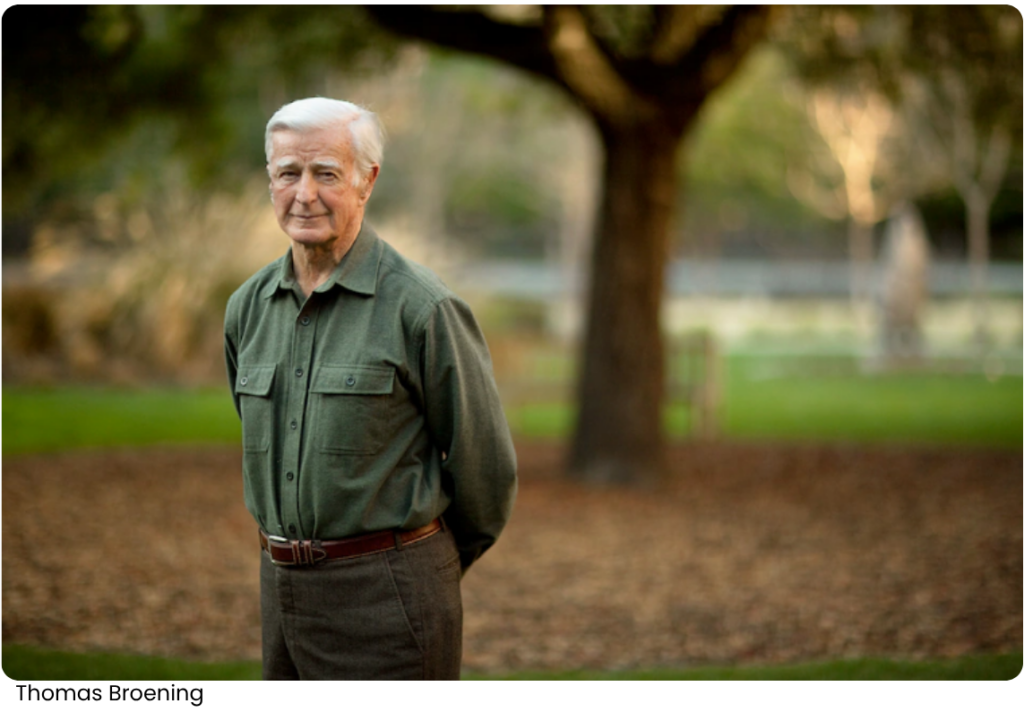
Few individuals have shaped the game of golf and the city of San Francisco as profoundly as Sandy Tatum. His life was a testament to the belief that golf, at its best, builds character, opens doors, and serves communities for generations to come.
“Golf lives and thrives in San Francisco because of Sandy. His work and his memory will live on forever.”
— Bo Links, golf historian and longtime friend
01 | ABOUT SANDY – EARLY LIFE
A Love Affair with Golf, From the Very Beginning.
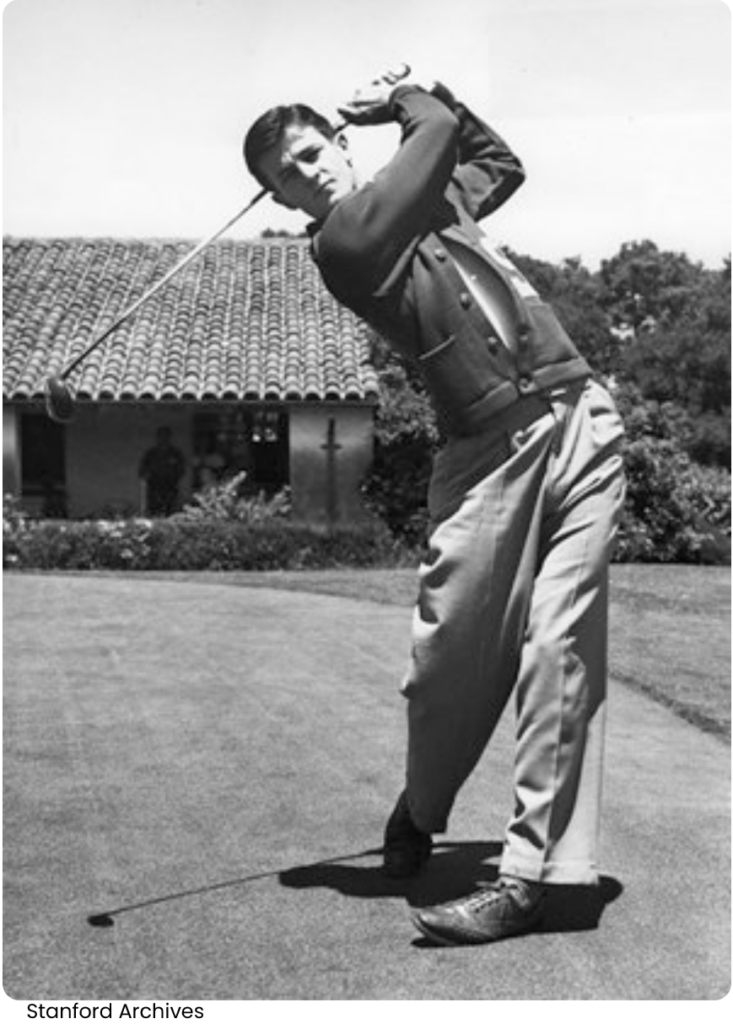
Frank Donovan “Sandy” Tatum Jr. was born on July 7, 1920, and raised in Los Angeles. His introduction to golf came at age six, when his father, a solid 4-handicapper, would take him along on Sunday rounds at Bel Air Country Club. Armed with a couple of golf balls and a pair of sawed-off hickory-shafted clubs, young Sandy found his calling in the fairways of that beloved course.
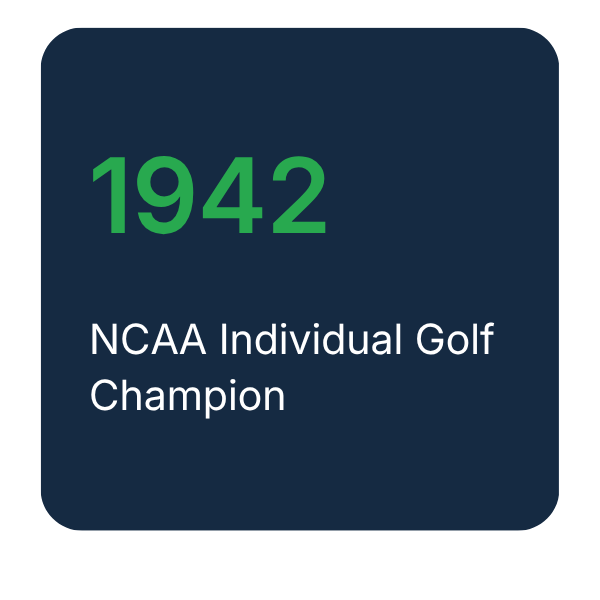
Sandy enrolled at Stanford University, inspired by his older brother Donn, and quickly found a home both intellectually and athletically. He thrived in the Cardinal community, later describing Stanford as “spellbinding” for the quality of its people and the synergy of its environment. On the golf course, he became one of the program’s all-time greats, helping Stanford win back-to-back NCAA Championships in 1941 and 1942. In 1942, he claimed the individual title, a distinction he held alone for more than 50 years, until Tiger Woods joined him in 1996.
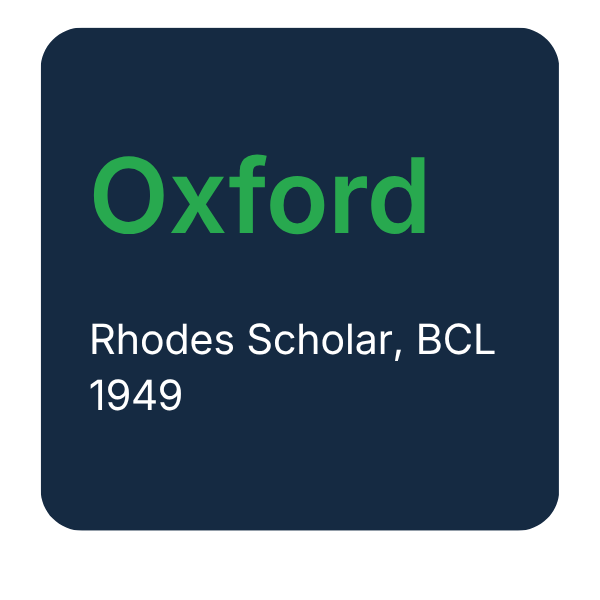
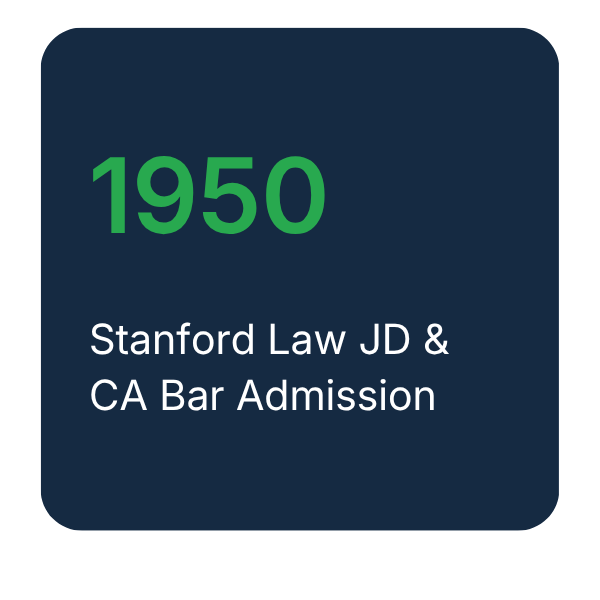
Following his undergraduate years, Sandy was awarded a Rhodes Scholarship to Oxford University, where he became the first American to play on the university’s golf team. He earned his BCL in 1949, returned to Stanford for law school, and was admitted to the California bar in 1950. He went on to build a distinguished legal career with Cooley Godward Kronish in Palo Alto, where he continued to show up daily, advising clients and mentoring others, well into his 90s. In his 2002 memoir, A Love Affair With the Game, he wrote: “There is infinitely more to be had in and from a life than making barrels full of money and having extravagant public exposure.”
02 | SANDY’S LEGACY IN GOLF AND FIRST TEE — SAN FRANCISCO
Shaping the Game. Opening the Game.
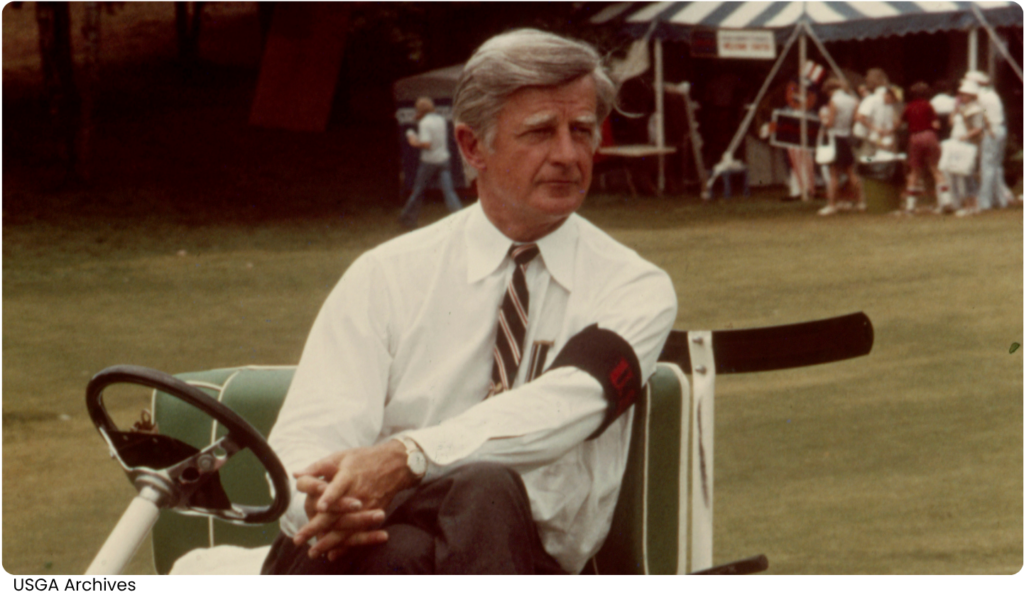
Sandy Tatum’s contributions to golf extended far beyond the scorecard. He joined the USGA Executive Committee in 1972 and served as president from 1978 to 1979, influencing course setups, television contracts, and the direction of amateur golf in America. He was instrumental in bringing the U.S. Open to the Olympic Club in San Francisco and to Pebble Beach Golf Links, venues that have since welcomed the championship a combined eleven times.
At the 1974 U.S. Open at Winged Foot, a famously demanding course setup drew widespread criticism. Sandy offered what became one of golf’s most enduring lines: “We’re not trying to humiliate the best players in the world. We’re simply trying to identify who they are.” It was a phrase that captured something essential about Sandy himself: principled, unwavering, and always focused on what the game was truly for.
Restoring Harding Park for Everyone
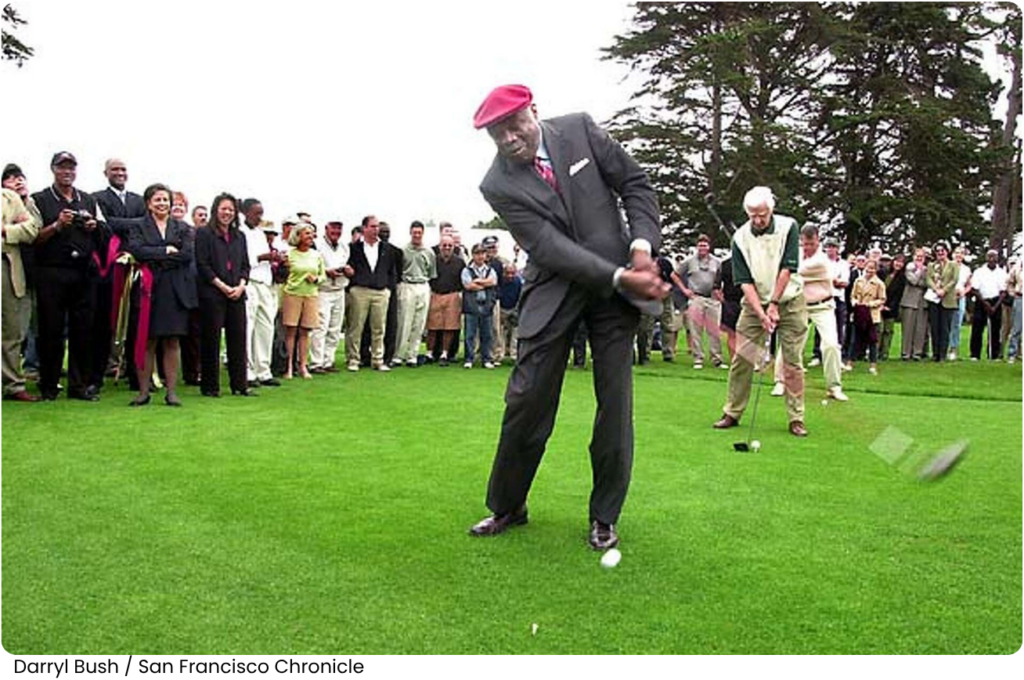
Sandy’s greatest gift to San Francisco golf was his decades-long campaign to restore TPC Harding Park. A jewel in the 1950s and ’60s, the course had fallen into serious disrepair. Sandy was appalled. As he later put it: “I was just horrified to see the golf course turning into a weed patch.” He believed deeply that more than 80 percent of golf was played on public courses, and that those courses deserved to be great.
Working alongside Charles Schwab, former Mayor Willie Brown, and PGA Tour Commissioner Tim Finchem, Sandy saw a $16 million renovation through to completion. The restored Harding Park went on to host the 2005 WGC-American Express Championship, the 2009 Presidents Cup, and the 2020 PGA Championship. More importantly, the renovation included the Fleming course and a permanent home for First Tee — San Francisco, ensuring the course would serve young people from every corner of the city.
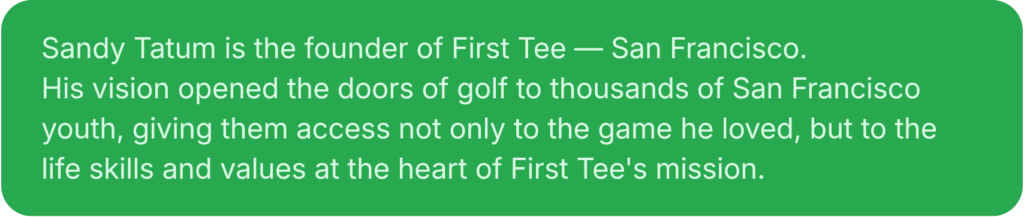
In addition to his advocacy work, Sandy contributed to golf course design, co-creating The Links at Spanish Bay in Pebble Beach alongside Tom Watson and Robert Trent Jones Jr., and co-designing courses in Lodi and Mount Shasta. He was a member of the Stanford Athletics Hall of Fame and the Bay Area Sports Hall of Fame, and he remained an active golfer into his 90s, never once surrendering his pursuit of the game.
03 | SANDY TATUM’S VISION AND FIRST TEE — SAN FRANCISCO
The Founder Who Never Stopped Believing
Sandy Tatum didn’t just support First Tee — San Francisco. He founded it. Through his tireless advocacy and his deep belief in the transformative power of golf, Sandy made it possible for thousands of San Francisco youth to step onto the course and discover something far greater than the game itself: confidence, character, and a sense of possibility.
His vision was grounded in a simple but powerful conviction that golf belongs to everyone. He knew firsthand what the game could give a young person, and he spent decades ensuring that young people across San Francisco had the same chance. First Tee — San Francisco was the fullest expression of that belief.
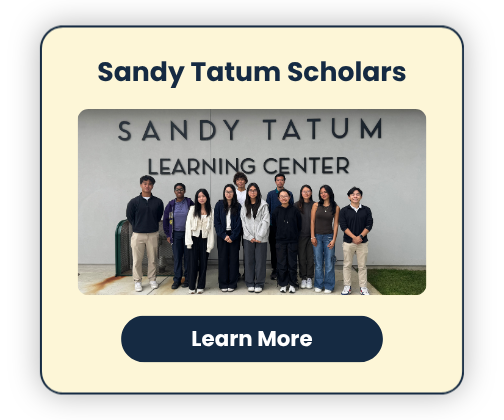
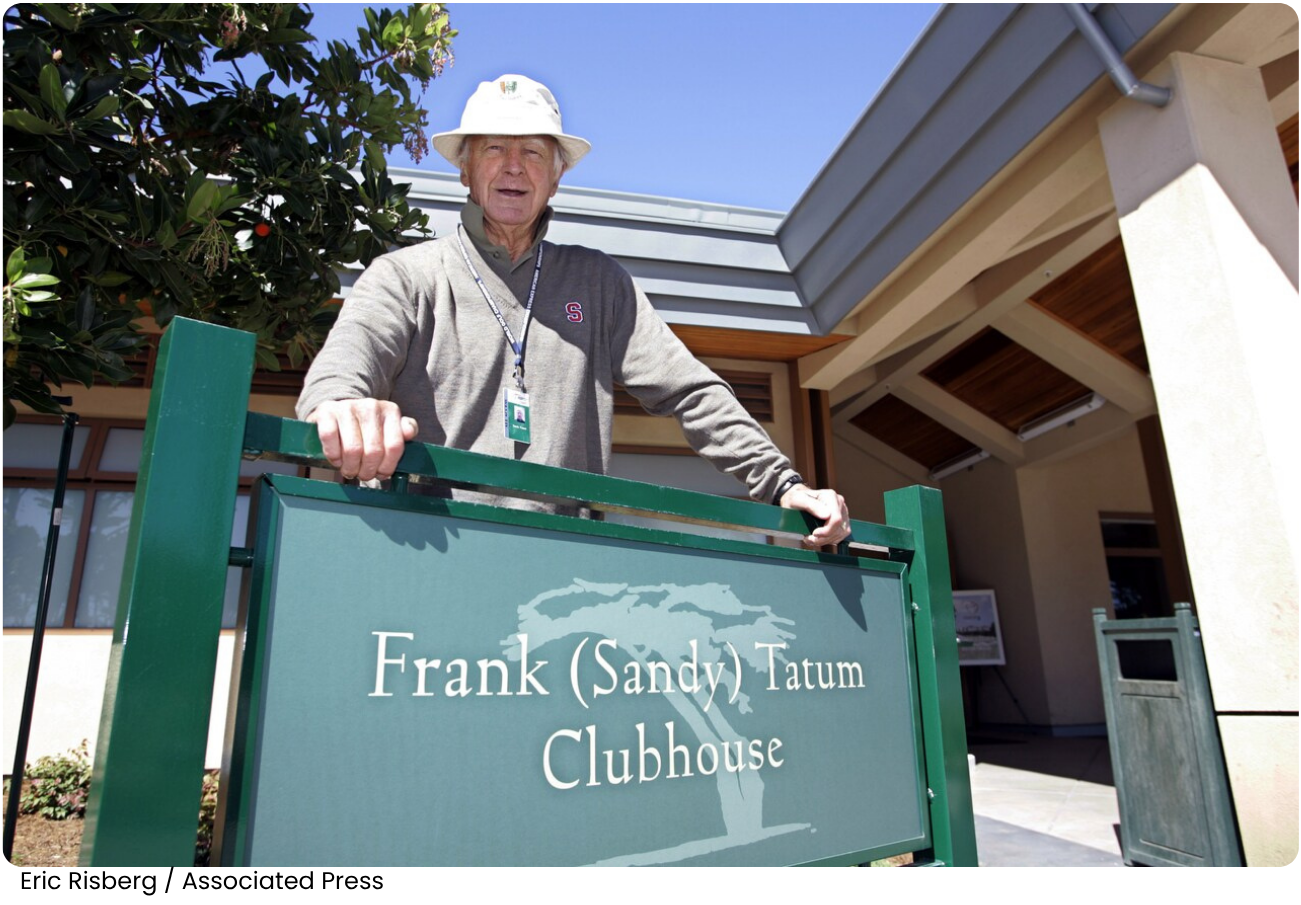
After Sandy’s passing, his dear friend Charles Schwab honored his legacy by donating the Sandy Tatum Statue, which proudly stands in front of the Sandy Tatum Clubhouse. Additionally, Schwab funded the renovation and construction of the Sandy Tatum Learning Center at TPC Harding Park.
Today, the Sandy Tatum Learning Center at TPC Harding Park serves as the home base for First Tee — San Francisco. It is where coaches work every day to deliver the program that Sandy helped make possible: one that uses golf as a vehicle for building character, confidence, and life skills in young people across San Francisco.
Sandy Tatum believed that being “blessed with privileges” came with a responsibility to give back. He modeled that belief every day — as an attorney, a statesman of the game, a mentor, and a champion for the youth of San Francisco. The Sandy Tatum Learning Center ensures that his legacy will shape young lives for generations to come.
Check out all First Tee — San Francisco programs that continue Sandy’s Legacy.